
NASA to collaborate with Lithuania's Delta Biosciences on space health innovations
Lithuanian life sciences company Delta Biosciences has become the first European firm selected for NASA’s Space-H accelerator program, which promotes advanced space healthcare technologies. This opportunity was facilitated by a 2023 R&D contract with the European Space Agency (ESA).
PHYSICAL SCIENCES
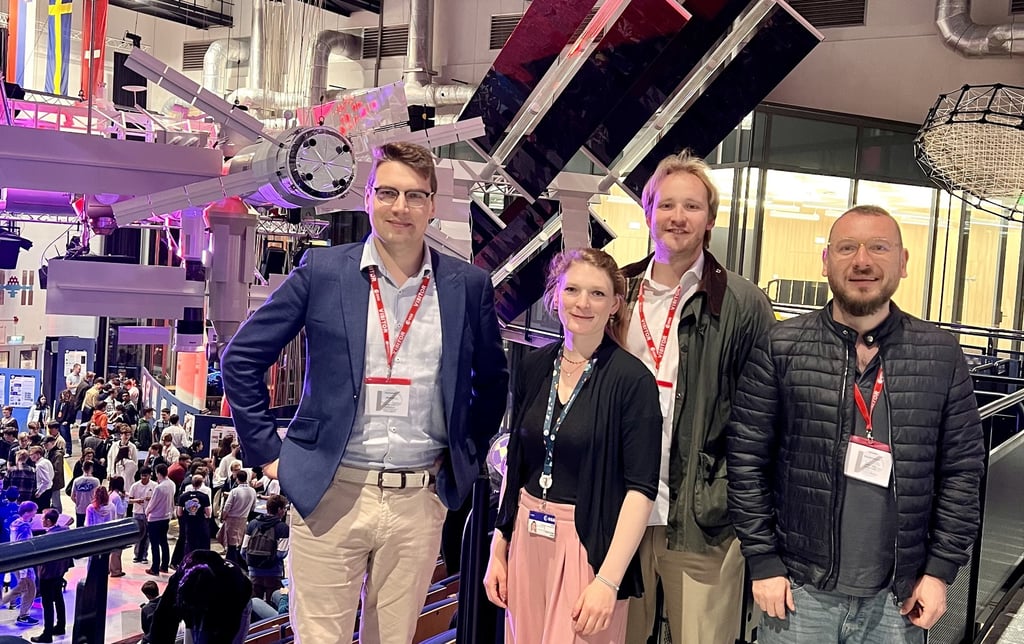
As part of this collaboration, Delta Biosciences has been working on chemical compounds designed to protect astronauts from radiation during deep space missions. Together with NASA, the company will contribute to pioneering solutions in space healthcare, helping to prepare for humanity’s upcoming leap into deep space exploration.
According to Delta Biosciences founder, Dominykas Milašius, the project represents the company’s entry into a new field—astrochemistry, which applies biochemical research to space.
“This project will expand scientific research in astrochemistry. Our partnership with ESA has driven us to adapt our biochemical research technologies for space exploration. Being recognized by Space-H motivates us even more to contribute to reducing the harmful health effects of space travel. We are now preparing for the next step—experimental validation of our research in orbit. We aim to conduct experiments on the International Space Station and further immerse ourselves in space medicine,” Milašius explained.
Jekaterina Kalinienė, head of the BioTech Lab division at Lithuania’s Innovation Agency, sees Delta Biosciences' participation as an important milestone for the country.
“This collaboration marks a significant phase in developing resilient and autonomous healthcare systems for future space missions. Lithuania’s life sciences sector, which has been growing annually by about 30%, benefits from constant innovation and the exploration of new fields. Continued success will further solidify our global standing,” Kalinienė noted.
Radiation Protection for Both Astronauts and Cancer Patients
The collaboration between Delta Biosciences and ESA is currently focused on developing radioprotective compounds that could shield astronauts from cosmic radiation. This research is crucial for long-duration deep space missions, especially those planned for the Moon and Mars.
“Our partnership with Delta Biosciences is part of ESA’s broader strategy to better understand how to protect human health during space missions. Delta Biosciences’ innovative approach to radioprotective compounds may help future research beyond low-Earth orbit,” said Dr. Christine Hahn, a researcher at ESA’s Directorate of Human and Robotic Exploration.
Dr. Donatas Žmuidinavičius, Chief Information Officer at Delta Biosciences, revealed that their work with ESA and Space-H is part of a larger, advanced scientific research project with broader applications.
“These studies are highly relevant not only to rescue teams and aerospace crews working under extreme conditions, who face elevated radiation exposure daily, but they also have medical benefits for cancer patients undergoing radiotherapy. We are following a dual-use research plan—applying it both on Earth and in space,” said Žmuidinavičius.
Focus on Commercial Space Travelers
Delta Biosciences is also one of twelve companies worldwide selected for the inaugural cohort of the Space-H Space Health Accelerator. This program is a unique collaboration between aerospace leaders Starburst, NASA’s Human Research Program (HRP), the Translational Research Institute for Space Health (TRISH), the Methuselah Foundation, and Microsoft. The initiative is focused on developing new autonomous healthcare systems required for missions to the Moon and Mars, as well as for commercial space travelers spending extended periods in low-Earth orbit.
“Science accelerators are an excellent way to foster innovation and technical progress. NASA is particularly interested in accelerators focused on space medicine, as more people will travel to space with the growing commercial sector. We are looking for ideas to advance medical care in space to meet the needs of an increasing number of astronauts,” said NASA HRP’s Chief Scientist, Jancy McPhee.
“NASA’s Artemis program and the growth of the low-Earth orbit (LEO) economy, including space tourism, exploration, and manufacturing, open new opportunities for biological research and support the development of advanced, fully autonomous medical systems. These new technologies, based on space research, will not only protect space travelers but could also improve healthcare outcomes here on Earth,” added Elizabeth Reynolds, CEO of Starburst.
Delta Biosciences is the only European company selected for the Space-H program. Other participants include international pioneers in space health such as ANYg Bio, Ejenta, Esperto Medical, GattaCo, Innsightful, LinkGevity, Mitrix Bio, Nahlia, NaNotics, Space REDI, and Synapsis Medical.